


On July 13, the training program titled “BRICS Officials Training Program on Jinjiang Experience Empowering Connectivity and Cultural Exchange,” sponsored by the Ministry of Commerce of China, visited Chang'an University (CHD). Vice President Fan Wen attended the event. The delegation comprised 29 government officials and think tank experts from Egypt, Ethiopia, Nigeria, and other countries.
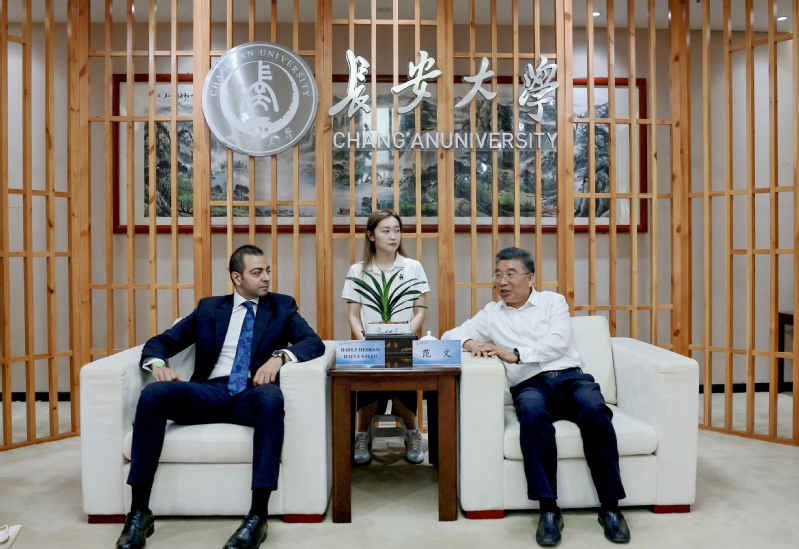
Fan Wen met with six representative participants, including Hafez Hesham Hafez Sayed, International Coordinator of the Egyptian Ministry of Local Development and Environment; Gebre Sisay Sintayehu, Director of the Ethiopian Policy Institute; and Akem-Harumi Rachael, member of the World Women Organization (Nigeria). He highlighted CHD’s distinct educational features and progress in international cooperation, stating that the university stands ready to leverage its disciplinary strengths to deepen practical collaboration with BRICS nations in talent cultivation, scientific research, and mutual recognition of standards, thereby contributing to global connectivity.
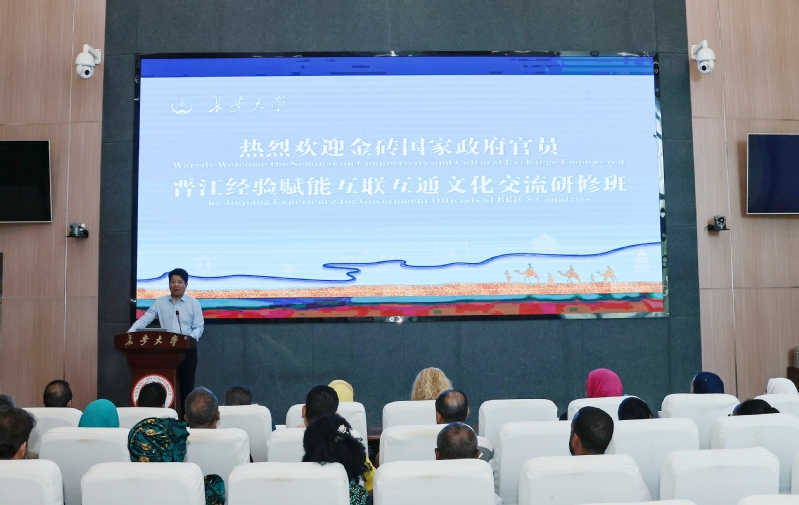
Zhang Wei, Dean of the School of International Education and Director of the Secretariat Office of the China-Central Asia Transport Infrastructure Talent Training Alliance, delivered a keynote lecture. He systematically elaborated on the “CHD Approach”—a model of industry-academia-research synergy designed to serve “BRICS Plus” connectivity initiatives. During the visit, CHD and Huaqiao University reached a strategic intent on cooperation regarding resource sharing for foreign aid training, joint scientific research, and collaborative think tank development. This partnership aims to establish a new paradigm where university consortia jointly serve the national foreign aid agenda.
Subsequently, the delegates toured the Chang'an University Transportation Museum, where they spoke highly of the university’s innovation capacity in serving major national strategies and its robust foreign aid training system. “The practical experience of Chang'an University is highly valuable,” said Eldesouky Youssef Mohamed Mabrouk, a member of the Spokesperson's Office at the Egyptian Ministry of Foreign Affairs. He noted that CHD’s low-cost, replicable experiences in low-carbon transport precisely address the urgent needs of developing countries. Ayale Wzemene Yohannes, Researcher at the Ethiopian Policy Institute, and Ilesanmi Omotola Adeyoju, Researcher at the Nigerian Institute of International Affairs, echoed this sentiment, stating that the training not only deepened their understanding of China’s transport governance model but also offered useful insights for improving infrastructure investment and financing mechanisms in their respective countries.
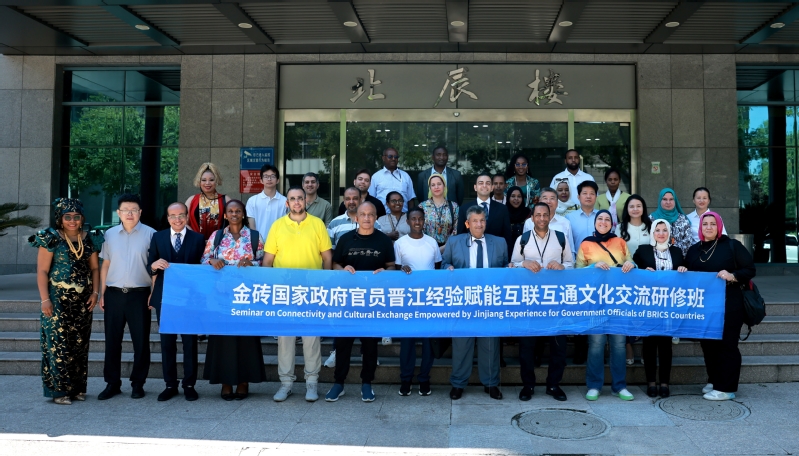
This visit represents a concrete practice of CHD’s commitment to leveraging its disciplinary strengths for deeper participation in national foreign aid programs. It fully demonstrates the university’s leading role and brand influence in cultivating international talent for the transportation sector. As a key node in serving the national diplomatic landscape, CHD will continue to expand the horizons of “BRICS Plus” educational cooperation and contribute robust “CHD strength” to building a global partnership for connectivity.
